The success rate of a cutting depends less on the cutting technique than on what happens in the hours and days that follow. Substrate, humidity, polarity of the taken fragment: each parameter influences rhizogenesis. Here, we detail the technical points that make the difference between a batch of cuttings with high yield and a series of stems that blacken within a few days.
Polarity and cutting zone: the factor that most guides overlook
A stem fragment planted upside down will not produce roots. Auxin polarity, meaning the natural direction of auxin migration towards the base of the branch, determines where the cells will dedifferentiate to form a callus and then roots. On a short cutting, it is easy to confuse the two ends after a few manipulations.
You may also like : How to Determine the Ideal Weight for a Woman Who is 1.62m: Tips and Practical Advice
We recommend cutting the base at an angle and the top flat. This visual code prevents any inversion at the time of replanting. The angled cut also provides a larger absorption surface in contact with the moist substrate.
The cut should be made just below a node, where the concentration of meristematic cells is highest. A bare internode planted in the ground often rots before it produces any roots. For those who want to multiply cuttings easily with Envies de Jardin, this node rule remains the first reflex to acquire.
You may also like : Practical tips and ideas to support your child's growth every day
Cutting substrate: composition and grain size for reliable rooting
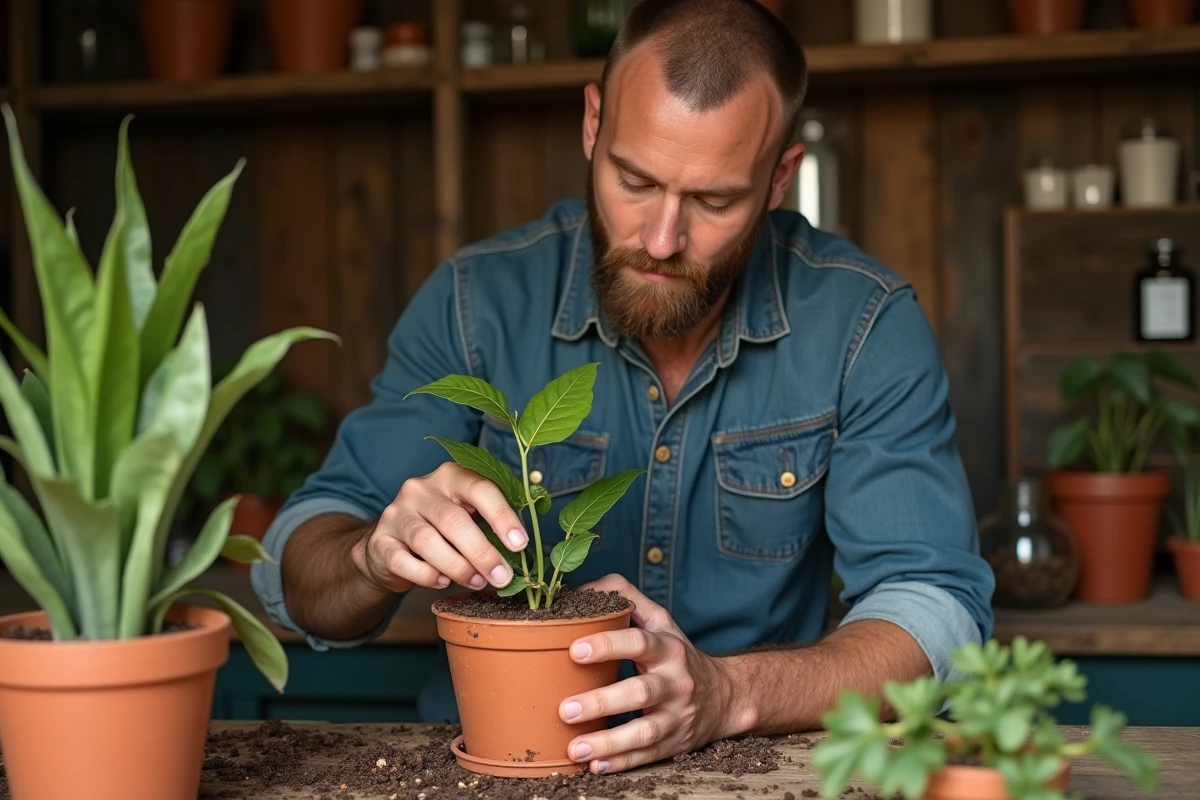
The ideal substrate retains moisture without ever becoming waterlogged. A mixture of equal parts perlite and peat (or coconut fiber) meets this requirement. Perlite ensures drainage and aeration, while peat maintains a consistent water reserve around the base of the cutting.
A classic potting soil, too rich in organic matter, promotes pathogenic fungi (Botrytis, Pythium) before the roots have time to form. We also avoid sand alone, which becomes too compact when wet and poor in retention.
Target grain size
Aim for a grain size between 2 and 5 mm for perlite. Below this, it clogs and reduces porosity. Above this, the contact between the stem and the substrate is insufficient, which slows down rhizogenesis.
- Fine perlite (2-3 mm): suitable for soft herbaceous cuttings (mint, basil, pothos) that require close contact with the substrate.
- Medium perlite (3-5 mm): suitable for semi-woody cuttings (hydrangea, rosemary, lavender) that handle a more aerated substrate better.
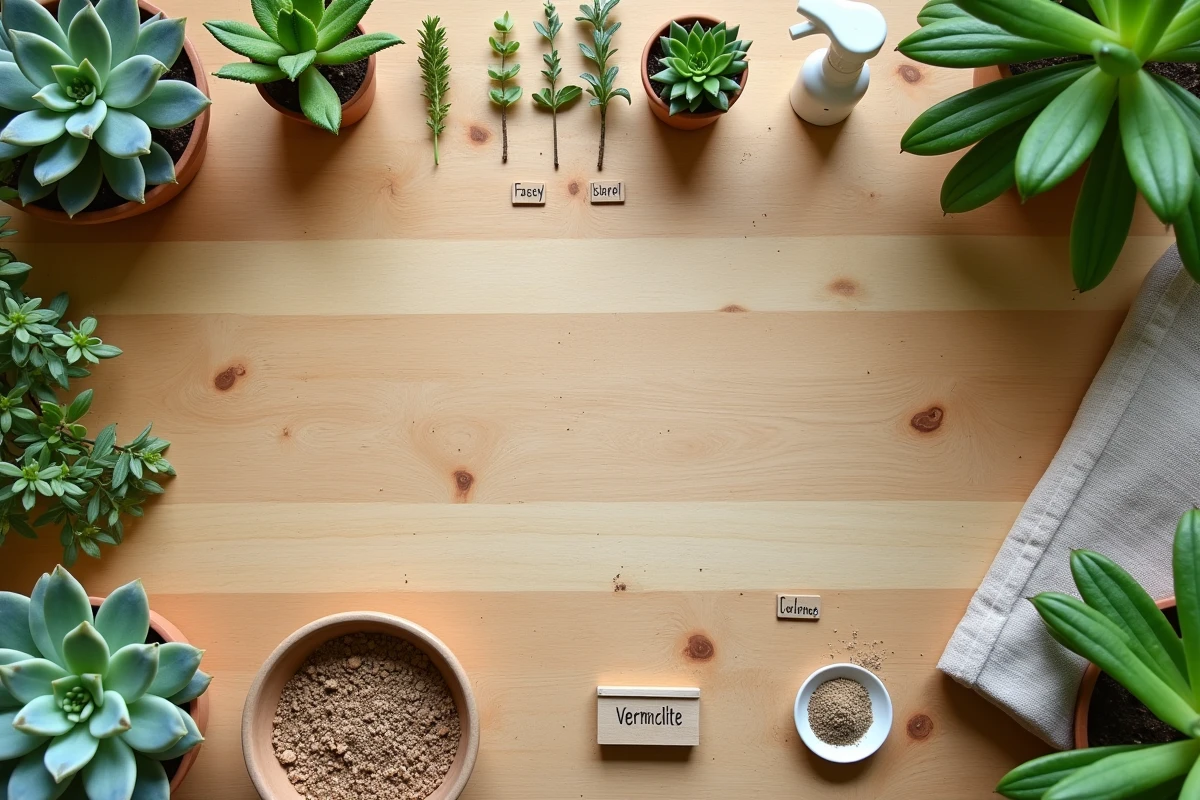
- Vermiculite as a supplement: useful in dry regions, as it releases water more slowly than perlite, but it compacts over time with watering.
Humidity stability under mini-greenhouse: the determining parameter
The consistency of ambient humidity matters more than the frequency of watering. Horticulturists specializing in the propagation of softwood shrubs (especially hydrangeas) emphasize this point: a cutting exposed to sudden humidity fluctuations loses its turgor, closes its stomata, and slows down all cellular activity.
A mini-greenhouse, a transparent plastic bag, or a simple glass dome creates a microclimate where the air remains saturated with water vapor. We open this protection for a few minutes each day to renew the air and limit excessive condensation that promotes gray rot.
Temperature and light under cover
Bottom heat accelerates cell division at the base of the cutting. A heating mat set around 20-24 °C under the substrate, combined with a slightly lower air temperature, creates a favorable differential: roots develop faster than aerial shoots, resulting in a better-balanced plant at the time of weaning.
Direct light should be avoided under the mini-greenhouse. It overheats the enclosed space and dries out the remaining leaves. Bright but filtered light (shade cloth, north-facing windowsill) is sufficient to maintain minimal photosynthesis without thermal stress.
Woody cuttings and base burning: a securing technique
For species with abundant latex (ficus, euphorbia) or hardwood cuttings taken in autumn, lightly burning the cutting surface with a flame cauterizes the conducting vessels. This operation limits sap flow, reduces the entry point for pathogens, and accelerates the formation of the scar callus.
The flame should be passed over the cut for one to two seconds, no more. Excess heat carbonizes the meristematic cells and nullifies any benefit. After burning, we let the cutting dry in the open air for a few hours before placing it in the substrate.
Rooting hormone: when it really makes a difference
Synthetic auxin (indole-butyric acid) is particularly useful only for species with slow rooting: conifers, certain evergreen shrubs, winter hardwoods. On a herbaceous cutting of mint or pothos, the natural concentration of auxins is more than sufficient.
- Powder: practical for semi-woody cuttings, adheres well to a moist cut.
- Gel: better contact on angled cuts, less waste than powder.
- Diluted liquid solution: allows calibrated soaking for large batches but requires precise dosing.
An overdose of hormone causes necrosis at the base rather than accelerated rooting. It is better to underdose than to saturate the plant tissue.
Weaning and replanting: the critical moment often rushed
Weaning, meaning the transition from the mini-greenhouse to open air, kills more cuttings than the rooting phase itself. A rooted cutting under saturated atmosphere has never needed to regulate its transpiration. Exposing it abruptly to ambient air causes rapid wilting.
We proceed in stages: opening the mini-greenhouse for one hour on the first day, two hours the next day, and so on over a week. When the cutting retains its leaves without signs of stress after a full day without cover, replanting into an individual pot can take place.
The replanting substrate is richer than the cutting substrate, but not excessively so. A mixture of potting soil, mature compost, and perlite in proportions suited to the species offers a good compromise between nutrition and drainage. Young roots, still fragile, do not tolerate excess soluble nitrogen that burns their tips.
Cutting remains the most accessible and economical method for expanding a garden or renewing tired herbs. Success depends on three parameters mastered simultaneously: a draining substrate, stable humidity, and gradual weaning. Neglecting any one of the three compromises the entire batch.