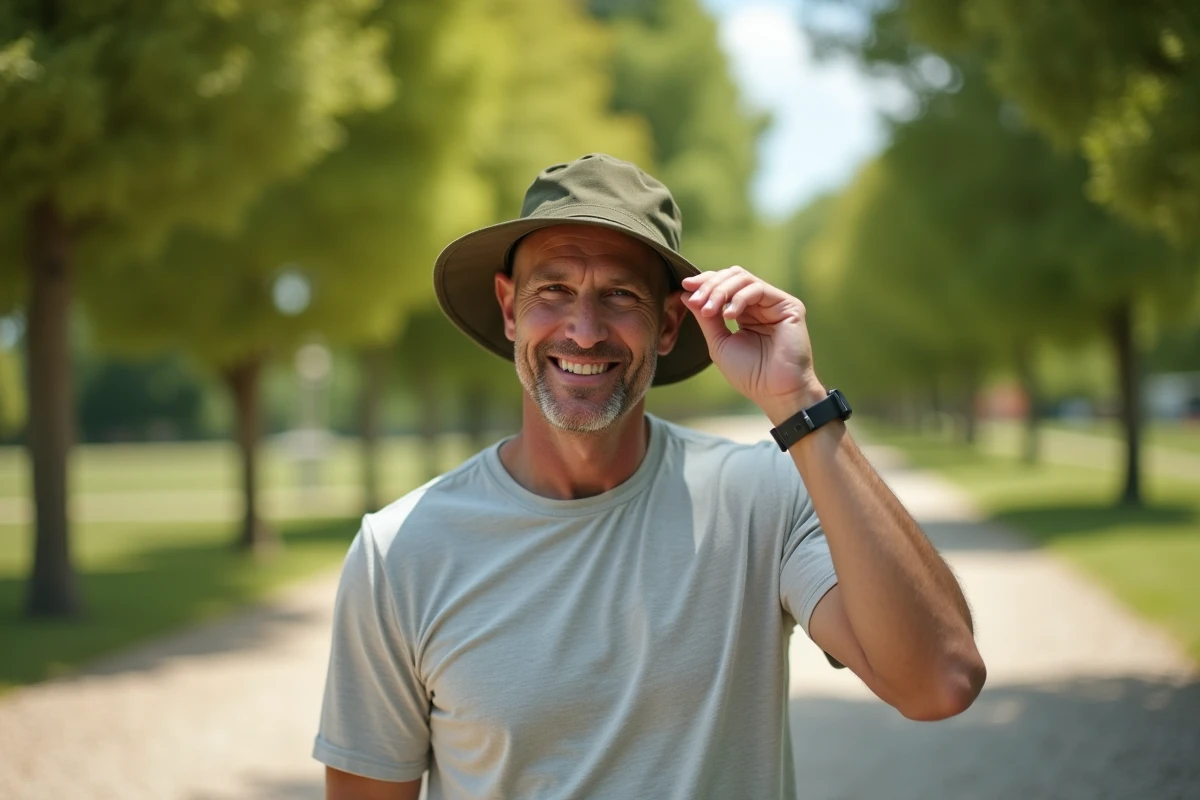
A shaved head in the full June sun, with nothing on it, guarantees a burn in less than half an hour. We know this because we’ve all experienced it at least once: the skin on the scalp pulls, turns red, and by evening the pain prevents sleep. Choosing a cap when you’re bald is not about style; it’s primarily a matter of sun protection for the head against UV rays.
Risk of skin cancer on a bald head: what dermatologists say
The French Society of Dermatology now classifies a balding scalp as a high-risk area for carcinoma, just like the nose or ears. The recommendation is clear: wear a head covering along with SPF 50, all year round and not just in summer.
We often think that sunburn on the scalp is a cosmetic issue. Recent studies document an increase in skin cancers in this specific area. The skin there is thin, without any natural barrier since hair, even sparse, played a role as a UV filter.
Public Health France and INSERM remind us in their reports on skin cancer prevention that a head covering without a certified UPF rating does not guarantee sufficient protection. An old cotton bucket hat or a cheap cap made of mesh fabric allows a significant portion of rays to pass through. To learn about which cap to choose for bald people, one must first understand this medical reality before discussing style or comfort.
UPF 50 cap for bald heads: the technical criterion to check first
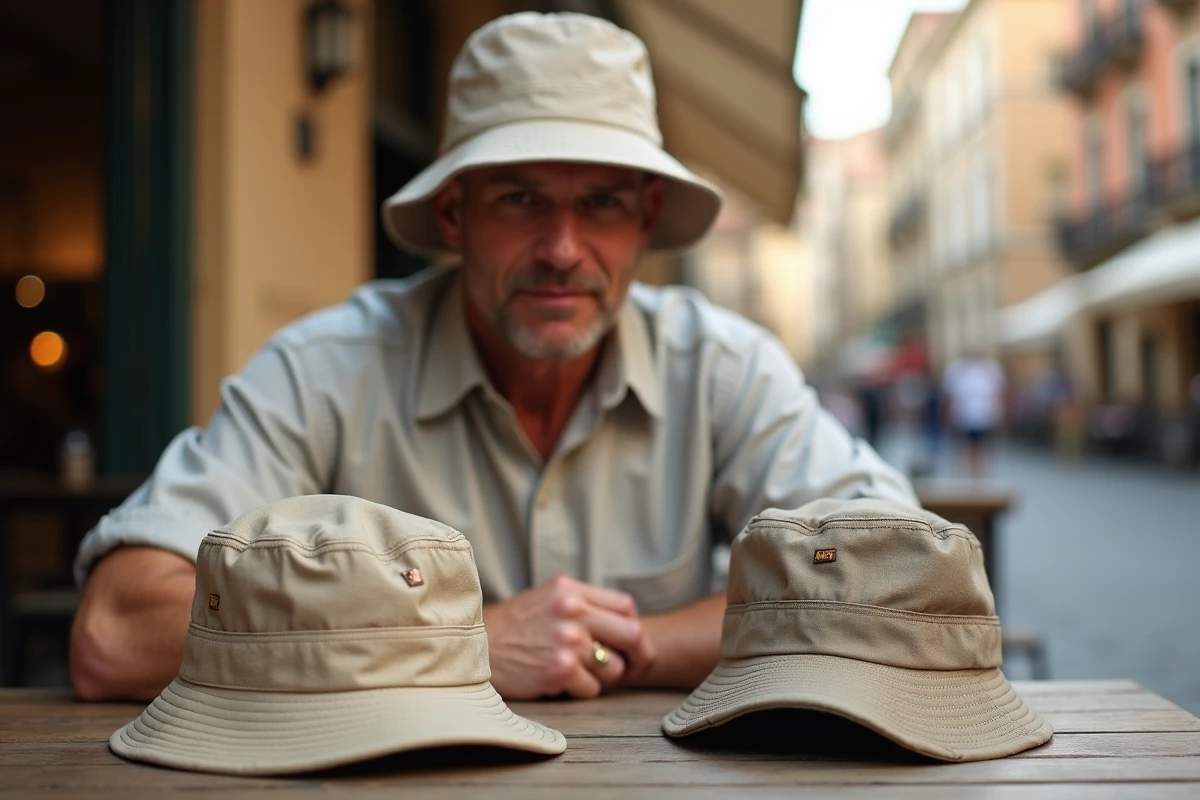
The EN 13758-2 standard, revised in 2019 and still in effect, governs the certification of UV protective textiles. Manufacturers that display UPF 50 or UPF 50+ on their caps rely on this standard. Specifically, a UPF 50 fabric blocks almost all ultraviolet radiation.
The trap is that a cap sold as “sun protection” without a UPF mention does not necessarily comply with this standard. Many models made of fine polyester or lightweight cotton filter poorly, especially after several washes.
What to check on the label
- The UPF rating must be clearly displayed, ideally UPF 50 or 50+. Below 30, the protection remains insufficient for prolonged exposure on a bare scalp.
- The mention of the EN 13758-2 standard confirms that the fabric has been tested in a laboratory, distinguishing true certification from mere marketing claims.
- The fabric weight matters: a cotton that is too thin, even UPF 30, will lose effectiveness with wear and successive washes.
Feedback varies on this point, but caps made of technical microfiber or dense cotton-polyester blends tend to retain their UPF rating better over time.
Light color and breathable fabric: avoid heat stroke under the cap
Clinical studies published in the Journal of the European Academy of Dermatology and Venereology show that bald individuals are more prone to localized heat strokes and thermal headaches under a dark, non-breathable cap. A shaved head no longer has an insulating layer; it accumulates heat directly against the fabric.
The researchers’ recommendation is pragmatic: favor light colors and breathable technical fabrics, such as microfiber or cotton-mesh blends. A black cap in the middle of summer on a bald head guarantees rapid overheating.
Baseball cap, trucker, or wide-brimmed cap
The classic baseball cap covers the top of the head well but leaves the neck and ears exposed. For someone who is bald, this is a weak point. Models with a removable neck flap or a wider visor provide significantly better protection.
The trucker cap, with its mesh back panel, offers good ventilation. The problem is that the mesh allows UV rays to pass through. You can compensate with sunscreen on the neck, but it’s good to know this before purchasing.
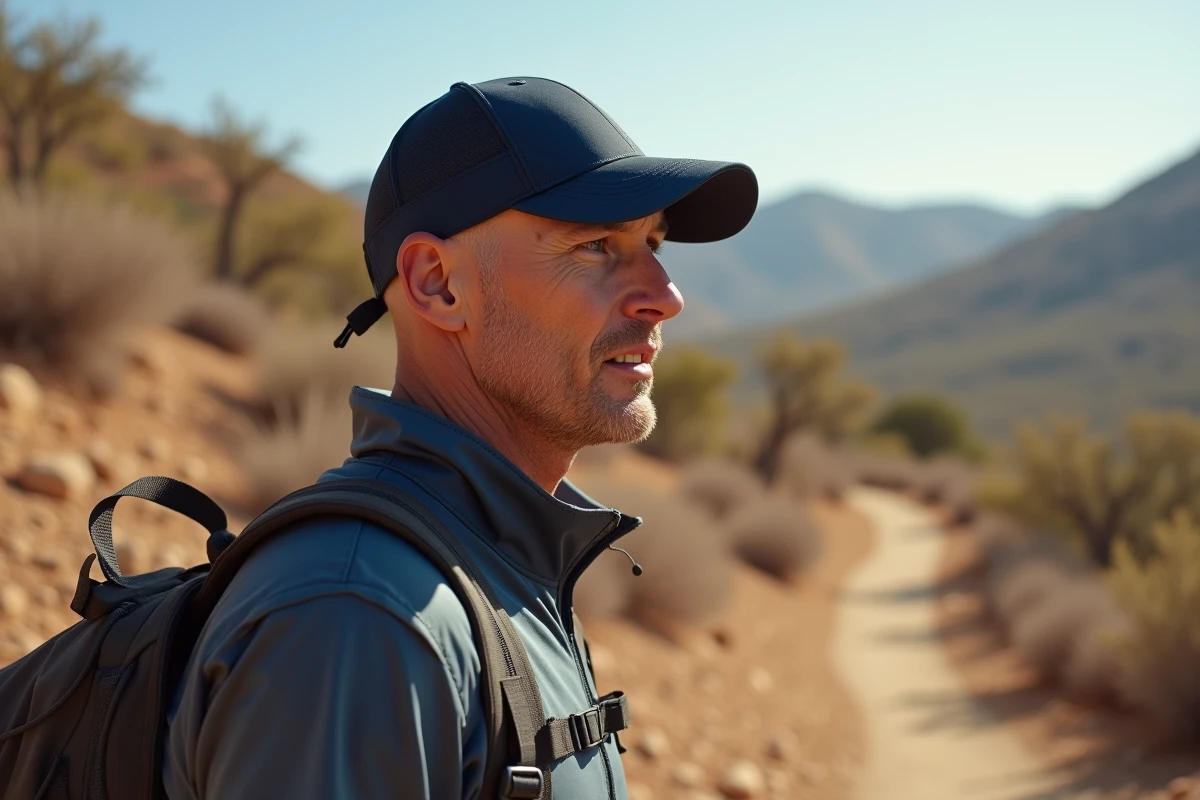
For long exposure (hiking, gardening, construction), a wide-brimmed cap with an integrated neck protector remains the most effective choice for a balding head. The style is less urban, but the coverage is complete.
Fit and comfort on a shaved head: the details that make all the difference
A hairless head sweats more when in direct contact with the fabric. Interior bands made of synthetic leather or hard plastic can cause irritation within hours. Instead, look for an inner band made of absorbent fabric or technical mesh.
The closure system also matters. Caps with Velcro or metal buckles allow for precise adjustment. On a shaved head, even the slightest looseness can cause the cap to slide, especially when sweating.
- Test the cap without hair in the store, not over hair, to ensure that the fit is correct without being tight.
- Avoid thick interior seams on the top, which create uncomfortable pressure points on bare skin.
- Check that the visor is long enough to protect the forehead and the top of the nose, areas that burn quickly when the scalp is bald.
Size is not a detail. Many caps are designed for heads with hair volume. You may end up with a model that is too large and floats or one that is too small and compresses. Brands specializing in outdoor headgear often offer more precise sizes than the one-size-fits-all options available commercially.
Ultimately, the best cap for a bald head combines three things: a certified UPF 50 rating, a light and breathable fabric, and a fit designed for a hairless head. The rest, the shape, the brand, the exact color, can be adjusted according to personal preferences. But these three criteria are non-negotiable if the goal is to protect one’s skin from the sun in the long term.